
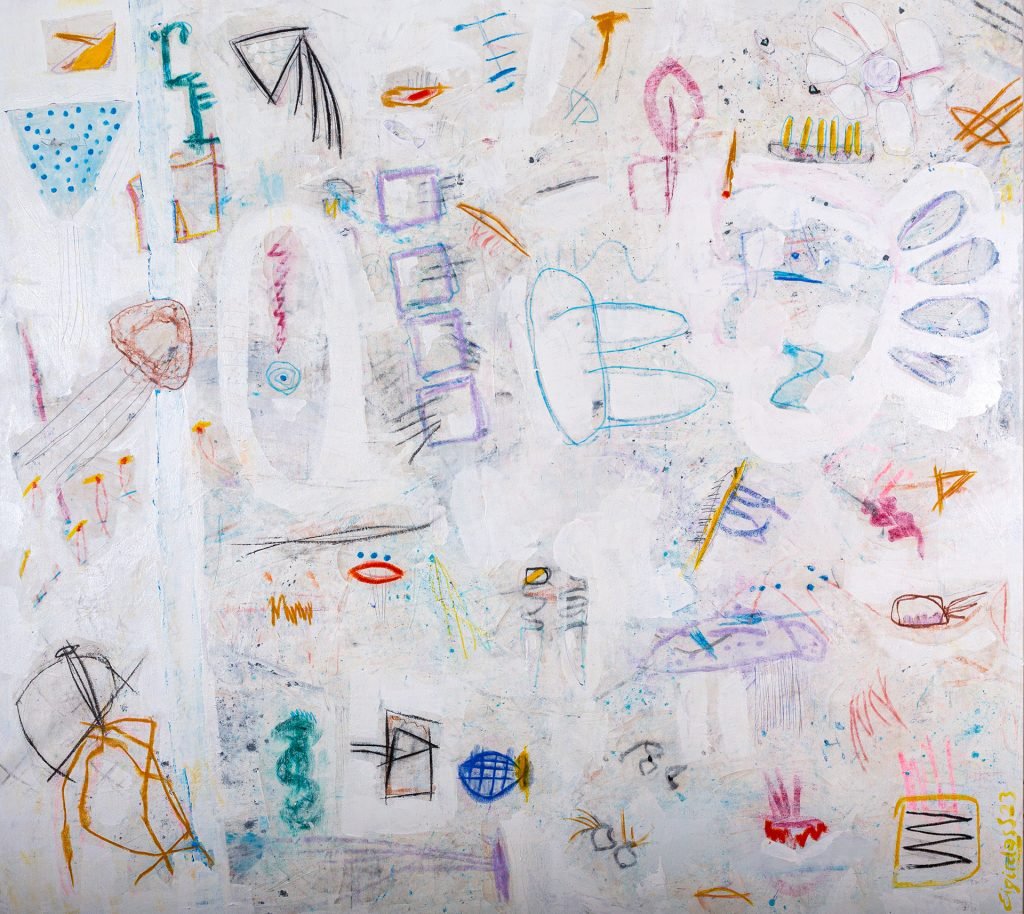
“I don't understand abstraction” is perhaps the phrase abstract painters hear most often. But abstract art doesn't need to be understood – it needs to be felt. This article is about how to look at an abstract painting and why it affects us differently from figurative painting.
Abstraction is freedom from narrative
Figurative painting tells a story; abstract painting creates a state of mind. There is no right answer to guess. The eye wanders freely across colour, texture and rhythm, and meanwhile the mind grows quiet. Research shows that a few minutes spent looking at a work of art lowers stress levels much as a short meditation does.
Contemporary art and abstract painting are about individuality, untouched by outside distractions. Pure creativity, an inner flight and a sense of the present.
— Eigirdas Scinskas
Colour as a structural force
In mature abstraction, colour is not just an emotional impulse: it builds layers, opens up depth and balances between intensity and calm. Eigirdas Scinskas's works bring discipline to the expressive brushstroke: the energy is controlled, structured and purposeful. It is precisely this tension between freedom and control that brings a work to life.
How to look at an abstract painting
Don't ask yourself “what is depicted here?”. Instead, ask: what do I feel? Where does my eye go first? What is the mood of the work – calm or movement? Let the painting work on you the way music does, without words and without translation. If after a few minutes you still want to keep looking, the work is right for you.
Experience abstraction in person
The best way to get to know abstract painting is to see it up close: the texture, the layers, mark upon mark. Visit the artist's exhibitions or browse the gallery of abstract paintings.