
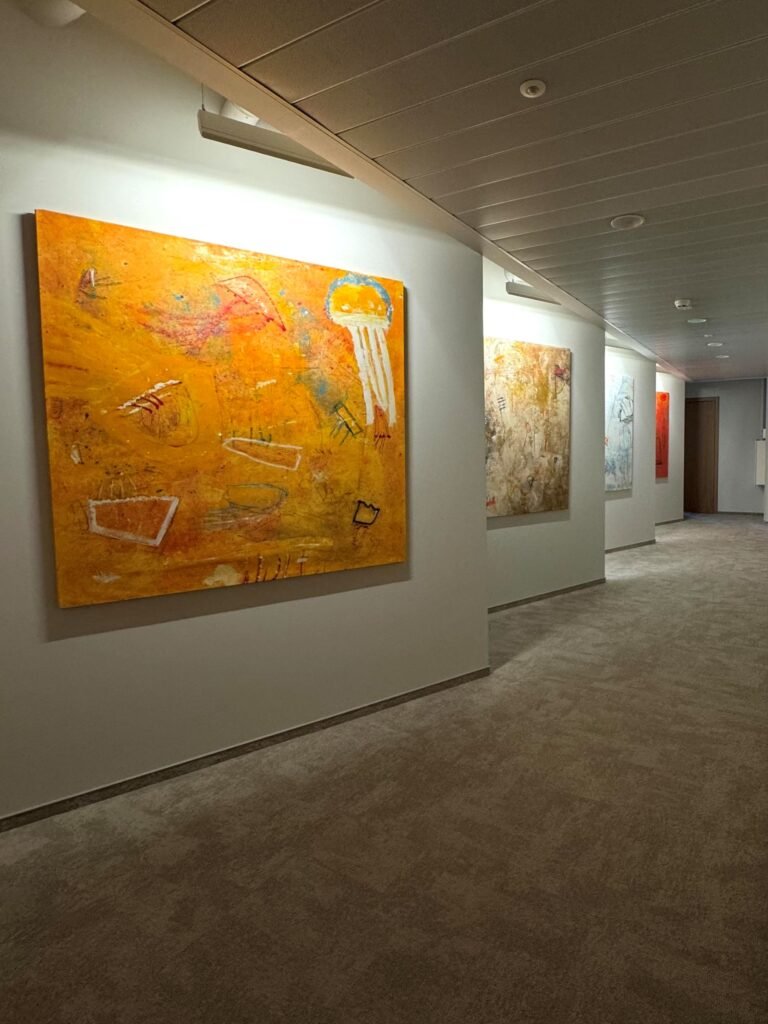
Even the strongest work loses some of its power if it is hung in the wrong place. Conversely, the right position, height and light turn a painting into the centre of a space. Here are practical principles for displaying a painting in an interior.
Height: the most common mistake
Paintings are most often hung too high. Galleries follow a rule: the centre of the work sits about 145–155 cm from the floor, at human eye level. Above a sofa or chest of drawers, a painting should hang 15–25 cm above the top of the furniture, so that the two are read as a single composition.
Size and proportion
A small painting gets lost on a large wall. If the wall is wide, choose a large format or several works side by side. A large-format canvas lets the viewer experience painting physically, to feel its weight and rhythm. That is exactly why collectors and architects most often choose works that do not decorate a space but shape it.
Light: natural and directional
Avoid direct sunlight, which fades pigments over time. Best of all is natural diffused light or directional LED lighting (3000K warm white) at a 30-degree angle. You will notice that an abstract work looks different in morning and evening light. That is not a flaw but one of the reasons an original never grows tiresome.
When art becomes the axis of a space
In mature abstraction, colour is a structural force: it creates depth and balances intensity with calm. That is why Eigirdas Scinskas's works sit naturally within contemporary residential and commercial projects. Browse the collection or ask for advice on a work for your space via private visit.